Housekeeping’s core function is maintaining cleanliness, impacting guest satisfaction directly; training checklists and duty rosters ensure efficient, high-standard operations for a welcoming environment.
Overview of the Housekeeping Department
The Housekeeping Department is pivotal in hotel operations, directly influencing guest experiences and overall reputation. Its responsibilities span maintaining immaculate guest rooms, pristine public spaces, and efficient laundry services. A well-structured department utilizes duty rosters and checklists to ensure consistent cleanliness standards.
Effective management involves scheduling staff, managing linen inventories, and overseeing cleaning supply procurement. Utilizing tools like KPA Flex, departments can customize checklists and track performance. Ultimately, the department’s success hinges on skilled staff, thorough training, and a commitment to providing a comfortable, inviting atmosphere for every guest.
Importance of Defined Roles in Housekeeping
Clearly defined roles within the housekeeping team are crucial for operational efficiency and maintaining consistently high cleanliness standards. Specific duties, outlined in duty rosters and checklists, prevent overlap and ensure all tasks are completed.
This structure allows for focused training and skill development, enhancing staff productivity. Utilizing tools like customized checklists (e.g., KPA Flex) promotes accountability and accurate monitoring of work. Ultimately, well-defined roles contribute to a welcoming guest experience and a smoothly functioning department.
Core Duties of Housekeeping Staff
Essential tasks encompass room cleaning, public area sanitation, and laundry operations – all vital for guest comfort and a spotless, inviting hotel environment.
Room Attendant Responsibilities
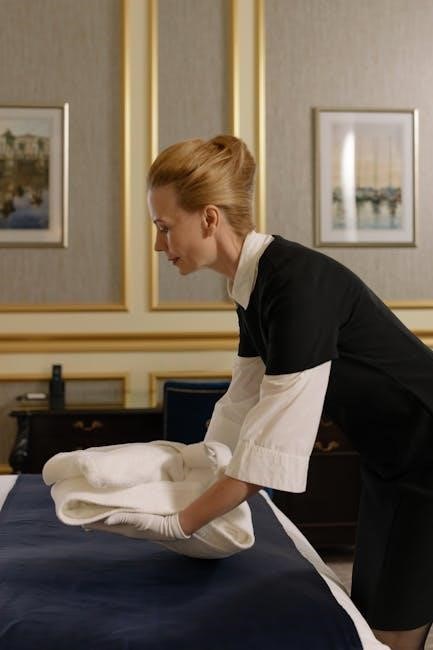
Room attendants are central to guest experience, diligently cleaning and preparing rooms for arrival. Key duties include making beds with fresh linens, thoroughly cleaning bathrooms, dusting all surfaces, and vacuuming floors.
They also remove trash, replenish amenities, and report any maintenance issues. Accurate monitoring via checklists ensures consistent cleanliness standards. Providing a comfortable and inviting environment is paramount, directly impacting guest satisfaction and hotel reputation. Efficient task completion contributes to overall productivity and a positive guest stay.
Public Area Cleaning Duties
Housekeeping staff maintain cleanliness in all public spaces, creating a welcoming atmosphere for guests. Essential tasks encompass lobby and reception upkeep, hallway and stairwell cleaning, and restroom sanitation.
Elevator polishing and general surface sanitization are also crucial. Following a cleaning schedule ensures consistent standards. These duties directly impact first impressions and overall guest experience. A clean and well-maintained public area reflects positively on the hotel’s commitment to hygiene and guest comfort.
Laundry Operations and Responsibilities
The laundry department handles all linens, ensuring a consistent supply of clean items for guest rooms and public areas. Core responsibilities include washing, drying, and meticulously folding linens, alongside ironing and pressing procedures to maintain a pristine appearance.
Effective inventory management of laundry supplies is vital. Maintaining cleanliness standards and efficient workflow are paramount. Proper operation ensures guest comfort and contributes to the overall hotel experience.

Detailed Breakdown of Room Attendant Tasks
Room attendants focus on bed making, bathroom cleaning, dusting, vacuuming, trash removal, and replenishing amenities – ensuring each room is immaculate for arriving guests.
Making Beds and Linen Changes
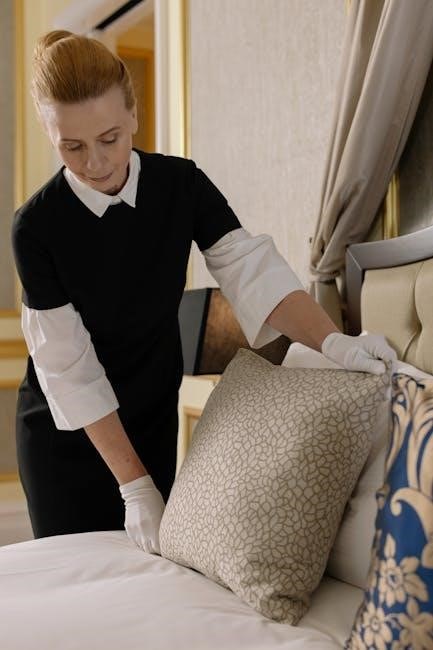
Bed making is a fundamental task, requiring neatly fitted sheets, blankets, and comforters, adhering to hotel standards for presentation. Linen changes involve removing soiled linens and replacing them with fresh ones, ensuring hygiene and guest comfort.
Attendants must inspect linens for damage, reporting any issues promptly. Proper handling of linens prevents contamination and maintains cleanliness. Efficient bed making and linen changes contribute significantly to a positive guest experience, reflecting attention to detail and a commitment to providing a welcoming and comfortable environment.
Bathroom Cleaning Procedures
Bathroom sanitation demands meticulous attention to detail, starting with removing all items and thoroughly cleaning surfaces like counters, sinks, and toilets with appropriate disinfectants. Shower and tub cleaning requires removing soap scum and mildew, ensuring a sparkling finish.
Floors must be scrubbed and sanitized, mirrors polished, and fresh amenities replenished. Proper ventilation is crucial during cleaning. Following established procedures guarantees a hygienic and pleasant bathroom experience for guests, contributing to overall satisfaction and upholding hotel cleanliness standards.
Dusting and Surface Sanitization
Effective dusting involves removing dust from all surfaces – furniture, fixtures, and decorations – using microfiber cloths or treated dusters to prevent redistribution. Surface sanitization requires applying disinfectant solutions to high-touch areas like doorknobs, light switches, and remote controls.
This process minimizes germ transmission and ensures a hygienic environment. Attention to detail is key, ensuring all areas are thoroughly cleaned and sanitized, contributing to guest health and safety, and upholding the hotel’s cleanliness standards.
Vacuuming and Floor Care
Vacuuming removes dirt, dust, and debris from carpets and rugs, utilizing appropriate attachments for edges and upholstery. Floor care extends to hard surfaces, requiring sweeping, mopping with designated cleaning solutions, and polishing to maintain shine and prevent damage.
Regular floor maintenance enhances appearance and extends the lifespan of flooring materials, contributing to a clean and inviting atmosphere for guests. Proper technique prevents scratches and ensures thorough cleaning.
Trash Removal and Replenishment
Trash removal involves collecting and disposing of waste from all areas, including guest rooms and public spaces, adhering to hotel protocols for recycling and hazardous materials. Replenishment duties encompass restocking amenities like toiletries, stationery, and guest supplies to ensure convenience.
Efficient waste management and consistent restocking contribute significantly to guest comfort and a positive hotel experience, demonstrating attention to detail and proactive service.

Public Area Cleaning – Specific Tasks
Maintaining lobbies, hallways, restrooms, and elevators requires scheduled cleaning and polishing, ensuring a consistently welcoming and hygienic environment for all hotel guests.
Lobby and Reception Area Maintenance
The lobby and reception area demand meticulous attention, serving as the first impression for guests. Daily tasks include dusting all surfaces – reception desks, seating, and decorative items – ensuring a spotless presentation. Floors require regular vacuuming and mopping to eliminate dirt and maintain shine.
Glass surfaces, like doors and windows, must be cleaned for clarity. Housekeeping staff also empty trash receptacles and maintain a tidy arrangement of brochures and reading materials. Consistent upkeep contributes significantly to a positive guest experience and reflects the hotel’s commitment to cleanliness.
Hallway and Stairwell Cleaning
Maintaining hallway and stairwell cleanliness is crucial for guest safety and comfort. Daily routines involve thorough vacuuming or mopping of floors to remove dust, debris, and potential hazards. Dusting baseboards, handrails, and wall surfaces ensures a polished appearance.
Spot cleaning any marks or stains promptly prevents buildup. Emptying trash receptacles and ensuring adequate lighting are also essential. Regular attention to these areas contributes to a welcoming atmosphere and minimizes slip-and-fall risks for all hotel patrons.
Restroom Sanitation in Public Areas
Public restroom sanitation demands meticulous attention to detail, prioritizing hygiene for all guests. Housekeeping staff must regularly disinfect toilets, sinks, and countertops using approved cleaning agents. Replenishing soap, hand towels, and toilet paper is essential for convenience.
Floors require frequent mopping and sanitizing, while mirrors should be cleaned for clarity. Addressing spills and odors promptly maintains a pleasant environment. Thorough restroom checks throughout the day ensure ongoing cleanliness and guest satisfaction.
Elevator Cleaning and Polishing
Elevator cleanliness contributes significantly to a hotel’s overall impression. Housekeeping staff are responsible for regularly wiping down elevator walls, doors, and control panels with disinfectant. Polishing stainless steel surfaces, including doors and buttons, removes fingerprints and maintains a gleaming appearance.
Floors require vacuuming or mopping to eliminate dust and debris. Mirrors should be cleaned for clarity, and any odors addressed promptly. Consistent elevator maintenance ensures a safe and pleasant experience for all guests.

Laundry Department Responsibilities
Laundry staff manage washing, drying, folding, ironing, and pressing linens, alongside meticulous inventory control of all essential laundry supplies.
Washing, Drying, and Folding Linens
Efficient linen handling is crucial; staff must sort items correctly, selecting appropriate wash cycles and detergents for various fabrics. Proper loading of washing machines maximizes capacity while preventing damage; Following drying instructions prevents shrinkage or discoloration.
Precise folding techniques ensure a neat, presentable appearance, optimizing storage space. Maintaining cleanliness throughout the laundry process is paramount, adhering to hygiene standards. Regular machine maintenance guarantees optimal performance and extends equipment lifespan, contributing to overall operational efficiency.
Ironing and Pressing Procedures
Mastering ironing techniques is vital for presenting crisp, wrinkle-free linens. Staff must adjust iron temperatures based on fabric type, preventing scorching or damage. Consistent pressing ensures a professional finish, enhancing guest comfort and satisfaction.
Proper equipment maintenance – cleaning iron plates and checking for malfunctions – guarantees safe and effective operation. Efficient folding post-ironing maintains the pristine appearance. Adhering to safety protocols minimizes risks, creating a polished and inviting atmosphere for all hotel guests.
Inventory Management of Laundry Supplies
Effective laundry supply management is crucial for uninterrupted operations. Housekeeping staff must diligently track detergent, fabric softener, bleach, and linen stock levels. Regular inventory checks prevent shortages, ensuring consistent cleaning quality and guest satisfaction.
Accurate record-keeping and timely reordering are essential. Staff should report low stock levels promptly to avoid disruptions. Proper storage of chemicals, following safety guidelines, is paramount. Efficient management minimizes waste and controls costs within the housekeeping department.

Housekeeping Staff Safety Protocols
Prioritizing safety involves proper chemical handling, fall prevention, and lifting techniques; training ensures staff well-being and minimizes workplace hazards for all personnel.
Handling Cleaning Chemicals Safely
Effective chemical handling is paramount for housekeeping staff safety. Always read and understand Safety Data Sheets (SDS) before use, noting hazard warnings and first-aid measures. Dilute chemicals correctly, following manufacturer instructions precisely to avoid creating harmful fumes or damaging surfaces.
Wear appropriate Personal Protective Equipment (PPE) – gloves, eye protection, and masks – to prevent skin contact, inhalation, and splashes. Never mix chemicals, as dangerous reactions can occur. Store chemicals in a secure, well-ventilated area, clearly labeled and inaccessible to unauthorized personnel.
Proper disposal of chemical waste is crucial; follow local regulations and hotel procedures. Report any spills or incidents immediately to a supervisor for prompt and safe cleanup.
Preventing Slips, Trips, and Falls
Maintaining safe walkways is vital for housekeeping staff and guests. Immediately address wet floors by using “Wet Floor” signs and promptly cleaning spills. Ensure adequate lighting in all areas, especially hallways and stairwells, to improve visibility.
Keep hallways and work areas clutter-free, removing obstacles like cleaning supplies, carts, and misplaced items. Wear slip-resistant shoes to enhance traction and stability. Report any damaged flooring or uneven surfaces to maintenance for repair.
Be mindful of cords and cables, securing them properly to prevent tripping hazards.
Proper Lifting Techniques
Housekeeping staff frequently lift heavy items like linens, laundry bags, and cleaning supplies; employing correct techniques minimizes strain and injury risk. Bend at the knees, keeping your back straight, and maintain a firm grip on the object.
Avoid twisting while lifting; instead, pivot your feet to change direction. Hold the object close to your body to reduce stress on your back. If an item is too heavy, ask for assistance;
Utilize carts and dollies whenever possible to transport large loads, reducing physical exertion.
Housekeeping Checklists and Documentation
Daily checklists and schedules are vital for monitoring task completion, ensuring cleanliness standards, and efficiently managing housekeeping duties within the hotel environment.
Daily Room Cleaning Checklist
A comprehensive daily checklist guides staff through essential tasks, ensuring consistent room quality. This includes making the bed with fresh linens, thoroughly cleaning the bathroom – toilet, shower, and surfaces – and dusting all furniture.
Vacuuming or mopping floors, emptying trash receptacles, and replenishing amenities like toiletries and towels are crucial. The checklist also confirms window and mirror cleanliness, functional appliance checks, and a final inspection for any overlooked details.
Documentation of completed tasks and any reported maintenance issues is vital for efficient hotel operations and guest satisfaction, contributing to a welcoming environment.
Public Area Cleaning Schedule
A detailed schedule outlines cleaning frequencies for lobbies, hallways, stairwells, restrooms, and elevators, ensuring consistent cleanliness throughout the hotel. Daily tasks include sweeping, mopping, vacuuming carpets, and disinfecting high-touch surfaces like door handles and light switches.
Regular polishing of floors and furniture enhances appearance, while restroom sanitation demands frequent attention. The schedule also incorporates deep cleaning tasks performed weekly or monthly, maintaining a pristine environment for guests and staff alike.
Effective scheduling optimizes staff allocation and minimizes disruption to hotel operations.
Lost and Found Procedures
Housekeeping staff plays a crucial role in managing lost and found items, requiring a standardized procedure for documentation and safekeeping. Upon discovering an item, staff must immediately log it with details – date, time, location, and description – into a designated logbook or system.
Items should be securely stored in a locked area, and attempts made to identify the owner. After a defined period, unclaimed items are typically donated or disposed of, following hotel policy.
Clear procedures protect both guests and the hotel.

Training and Skill Development for Housekeeping Staff
Effective training encompasses cleaning techniques, safety protocols, and customer service skills, enhancing staff competency and ensuring consistently high standards of cleanliness.
Cleaning Techniques Training
Comprehensive cleaning techniques training is paramount for housekeeping staff, covering proper methods for various surfaces and materials. This includes instruction on effective dusting, sanitization, vacuuming, and floor care procedures, ensuring thoroughness and efficiency.
Staff should learn to utilize cleaning agents correctly, understanding dilution ratios and appropriate applications to avoid damage or safety hazards. Training must also emphasize detailed bathroom cleaning protocols and bed-making standards, contributing to consistently immaculate guest rooms.
Furthermore, practical demonstrations and hands-on practice are crucial for solidifying these skills, alongside regular refresher courses to maintain proficiency and introduce new techniques.
Safety Protocol Training
Robust safety protocol training is essential, prioritizing the well-being of housekeeping staff. This encompasses the safe handling of cleaning chemicals, including proper Personal Protective Equipment (PPE) usage and understanding hazard labels.
Training must address preventing slips, trips, and falls through awareness of wet floor conditions and proper footwear. Correct lifting techniques are vital to avoid musculoskeletal injuries, alongside emergency procedures for spills or accidents.
Regular drills and reinforcement of these protocols are crucial, fostering a safety-conscious culture within the housekeeping department and minimizing workplace risks.
Customer Service Skills for Housekeeping
Exceptional customer service from housekeeping staff significantly enhances the guest experience. Training should emphasize polite and respectful interactions, even during service requests or addressing concerns.
Staff must learn to anticipate guest needs, offering assistance proactively and responding promptly to requests. Discretion and maintaining guest privacy are paramount, alongside effective communication skills to understand and fulfill specific preferences.
A friendly demeanor and willingness to go the extra mile contribute to positive guest perceptions and overall hotel satisfaction, fostering loyalty and positive reviews.

Performance Evaluation and Standards
Key Performance Indicators (KPIs), guest feedback, and regular reviews are crucial for assessing housekeeping staff performance and maintaining consistently high cleanliness standards.
Key Performance Indicators (KPIs) for Housekeeping
Establishing clear KPIs is vital for evaluating housekeeping effectiveness. These metrics should encompass room cleanliness scores derived from guest feedback, consistently measuring satisfaction levels. Tracking room attendant productivity – rooms cleaned per shift – offers insight into efficiency.
Monitoring linen inventory accuracy and minimizing lost-and-found items demonstrates responsibility. Adherence to cleaning checklists and safety protocols are also key indicators. Regularly assessing these KPIs allows for targeted training, improved performance, and ultimately, enhanced guest experiences and operational efficiency within the department.
Guest Feedback and Complaint Handling
Proactive solicitation of guest feedback is crucial; housekeeping directly impacts guest satisfaction. Promptly addressing complaints – regarding cleanliness or missing amenities – demonstrates commitment to service recovery. Detailed documentation of all feedback, positive or negative, allows for trend analysis and process improvement.
Empowering housekeeping staff to resolve minor issues immediately enhances guest experience. Escalating complex concerns to management ensures appropriate handling and prevents recurrence. Utilizing feedback to refine cleaning protocols and training programs is essential for continuous improvement.
Regular Performance Reviews
Consistent performance reviews, aligned with Key Performance Indicators (KPIs), are vital for housekeeping staff development. These reviews should assess adherence to cleaning standards, efficiency, and responsiveness to guest feedback. Documentation of strengths and areas for improvement provides a clear path for growth.
Regular reviews facilitate open communication, allowing staff to voice concerns and receive constructive criticism. Recognizing exceptional performance boosts morale and encourages continued dedication to maintaining high cleanliness standards within the hotel environment;

Tools and Equipment Used by Housekeeping Staff
Essential tools include vacuum cleaners, floor machines, and diverse cleaning chemicals; proper inventory management of linens and supplies ensures efficient task completion.
Vacuum Cleaners and Floor Machines
Effective cleaning relies heavily on appropriate vacuum cleaners and floor machines, varying based on surface type. Upright vacuums suit carpets, while backpack models offer maneuverability in tight spaces. Floor scrubbers and polishers maintain hard floors, requiring training for safe operation and optimal results.
Regular maintenance – filter changes, brush roll cleaning – is crucial for performance. Staff must understand each machine’s specific functions and safety features to prevent damage and ensure thorough cleaning, contributing to guest satisfaction and a spotless environment.
Cleaning Chemicals and Disinfectants
Housekeeping staff utilize diverse cleaning chemicals and disinfectants, each designed for specific surfaces and soils. Understanding proper dilution ratios and dwell times is paramount for efficacy and safety. Training emphasizes selecting the correct product for the task, preventing damage, and ensuring thorough sanitation.
Safety Data Sheets (SDS) must be readily accessible, detailing handling procedures and potential hazards. Proper storage and labeling are essential, alongside adherence to safety protocols when mixing or applying these powerful cleaning agents.
Linens and Cleaning Supplies Inventory
Effective housekeeping relies on meticulous inventory management of linens and cleaning supplies. Staff are responsible for tracking usage, reporting shortages, and assisting with stock rotation to minimize waste and ensure availability. Regular inventory checks prevent disruptions to cleaning schedules.
Proper storage procedures are crucial, protecting supplies from damage and contamination. Accurate record-keeping, potentially utilizing digital systems, streamlines ordering processes and controls costs, contributing to overall departmental efficiency.