
Understanding how measurements translate into standardized sizes is essential for accurate selection across apparel, footwear, furniture, and vehicles. By aligning dimensions with industry charts, consumers can avoid mismatches and ensure optimal fit.
This guide serves as a reference forall
Clothing Size Standards
Clothing sizes vary globally, with US, UK, EU, and Asian systems. Standard charts list bust, waist, hip, and height. Conversions rely on numeric and letter codes; accurate measurement ensures proper fit, reducing returns and enhancing comfort.Use charts for precise fit.!!
Men’s Shirt Measurements
Men’s shirts are sized primarily by chest, waist, and sleeve length. The chest measurement is taken at the fullest part of the torso, just under the armpits, and is expressed in inches or centimeters. The waist measurements are taken at the natural waistline, usually a few inches above the belly button. Sleeve length is measured from the center back of the neck, over the shoulder, to the wrist bone, ensuring the cuff fits comfortably without excess fabric.

Standard sizing charts provide a range for each dimension. For example, a size Medium typically covers a chest of 38–40 inches, a waist of 32–34 inches, and a sleeve length of 32–33 inches. Larger sizes extend these ranges proportionally. When selecting a shirt, compare your exact measurements to the chart; if your chest measurement falls between two sizes, choose the larger size for a relaxed fit or the smaller for a tailored look.
Fit styles—regular, slim, or athletic—alter the cut and therefore the required measurements. Slim fits reduce chest and waist allowances, while athletic cuts add extra room in the shoulders and chest for muscular builds. Always check the fit description on the retailer’s site to match your body type and desired style.
For precise sizing, always measure twice and consult the retailer’s size guide. Minor variations in cut or brand can shift the fit by a half size. Keeping a log of your measurements helps maintain consistency across purchases and reduces return hassles and stay fit.!!!
Women’s Bra Sizing
Women’s bra sizing combines a band number and a cup letter, each derived from precise body measurements. The band size is calculated by measuring under the bust and rounding to the nearest even number, typically 28, 30, 32, 34, 36, 38, 40, 42, 44, or 46. The cup size is determined by the difference between the fullest bust measurement and the under‑bust measurement, with each inch or centimeter increment corresponding to a cup letter: A, B, C, D, DD/E, DDD/F, G, H, I, J, and so on.
To achieve an accurate fit, measure the under‑bust snugly but not tight, and the fullest bust at the peak of the breasts, ensuring the tape is level across the back. After obtaining the under‑bust measurement, add 4 inches (10 cm) to it and round to the nearest even number to get the band size. The cup size is then calculated by subtracting the band measurement from the fullest bust measurement; each inch difference typically equals one cup letter in a 1‑inch system, while a 2‑inch system yields fewer cup options.
Many retailers provide conversion charts that translate metric measurements to US sizes, and vice versa. It is also common for brands to offer “plus‑size” ranges, extending the band sizes to 48, 50, 52, 54, 56, and beyond, with corresponding cup sizes that accommodate larger bust volumes. Some specialty brands offer “tall” or “short” lines, adjusting band length and cup volume to match body proportions. When shopping online, always consult the brand’s specific sizing guide, as fit can vary between manufacturers.
Fit!!!!!

Children’s Apparel Sizing
Children’s clothing sizes are usually given in age, height, or weight ranges, but the most accurate method is to use body measurements. Key dimensions are chest, waist, hips, inseam, and height. For infants and toddlers, measurements are taken in inches or centimeters with a flexible tape. The chest is measured at the fullest part of the rib cage, the waist at the narrowest point, and the hips at the widest part of the buttocks. Height is measured from the floor to the top of the head while the child stands upright. Weight is recorded in pounds or kilograms, though it is less commonly used for sizing. Standard charts list sizes such as 0‑3, 4‑6, 7‑9, 10‑12, 13‑15, 16‑18, 19‑21, 22‑24, and 25‑27 for boys and girls, with separate charts for each gender. Some brands offer plus‑size ranges for older children, extending to 28‑30 and beyond. When selecting a size, compare the child’s measured chest, waist, hips, inseam, and height to the chart’s ranges. If the child’s measurements fall between two sizes, choose the larger size to allow for growth and comfort. Proper fit reduces the risk of chafing, improves mobility, and enhances overall comfort for the child. Additionally, many manufacturers provide conversion tables for metric and imperial units, and some use a 1‑inch or 2‑inch measurement system for cup sizing in children’s tops. Parents should also account for the child’s activity level; active wear often requires a looser fit to accommodate movement, whereas fitted garments may need a tighter measurement for comfort during play. Fit matters!!

Footwear Sizing Systems
Footwear sizing varies worldwide. The US system uses half‑inch increments, while the UK adds a half‑size offset. European sizes are based on the Paris point, roughly 1/3 inch per number. Conversion tables help shoppers match foot length to the correct size. 2026 Thank.
US Shoe Size Conversion
When converting U.S. shoe sizes to other systems, it is essential to consider both foot length and the sizing conventions of each region. The U.S. system uses a decimal scale, with men’s sizes typically ranging from 6 to 16, women’s from 4 to 12, and children’s from 4 to 10.5. To translate these numbers into the U.K., European (EU), or Japanese (JP) systems, reference the following guidelines.
- U.S. Men’s to U.K. Subtract 0.5; For example, U.S. 10.5 men’s equals U.K. 10.
- U.S. Women’s to U.K. Subtract 0.5. U.S. 8 women’s equals U.K. 7.5.
- U.S. to EU (Men) Add 30.5. U.S. 9 men’s becomes EU 39.5.
- U.S. to EU (Women) Add 31.5. U.S. 7 women’s becomes EU 38.5.
- U.S. to JP (Men) Add 20.5. U.S. 11 men’s equals JP 31.5.
- U.S. to JP (Women) Add 21.5. U.S. 6 women’s equals JP 27.5.
Foot length is measured from heel to toe in a relaxed position. Convert inches to centimeters by multiplying by 2.54. For instance, a 10-inch foot equals 25.4 cm. Use this measurement to cross‑check the conversion tables above, ensuring the chosen size accommodates a 1–2 mm margin for comfort.
| U.S. Size | U.K. | EU | JP |
|---|---|---|---|
| 8 (Men) | 7.5 | 38.5 | 28.5 |
| 9 (Women) | 8.5 | 39.5 | 29.5 |
| 10 (Men) | 9.5 | 40.5 | 30.5 |
| 7 (Women) | 6.5 | 37.5 | 27.5 |
Always try on shoes before purchase, especially when converting between systems, as fit can vary by brand and style. Online retailers often provide size guides that include foot length in centimeters for each size.
Children’s sizes follow a similar pattern but are often measured in inches rather than centimeters. A U.S. 5.5 child shoe typically corresponds to a U.K. 5, EU 35, and JP 23.5.
Remember, these are general guidelines; always verify with the manufacturer’s chart.
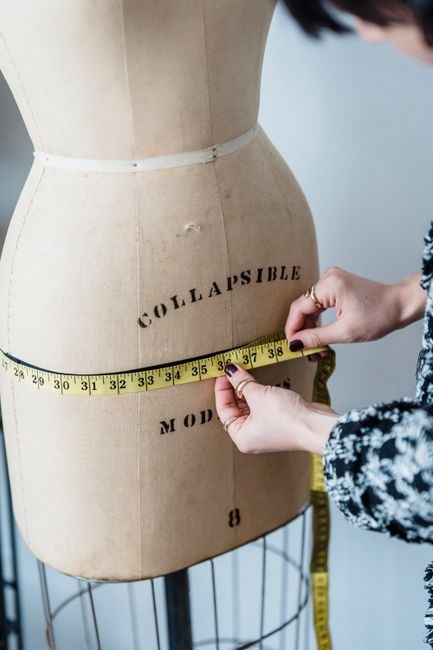
European Shoe Size Standards
European shoe sizing follows the Paris point system, where each size equals 1/3 of a centimeter. The standard conversion for men’s shoes ranges from size 35 to 48, while women’s typically span 35 to 42. A foot length of 26.5 cm corresponds to a size 42, and 27.5 cm to 43. The system is uniform across most European countries, simplifying cross‑border purchases.
To determine the correct size, measure the foot in centimeters and add 1.5 cm for men or 1.0 cm for women to account for heel and toe room. For example, a 27.0 cm foot would be 28.5 cm for men, yielding a size 43, and 28.0 cm for women, yielding a size 42.5. Shoe manufacturers often round to the nearest half‑size.
- Men’s: 35 = 13.8 in, 36 = 14.1 in, 37 = 14.4 in, 38 = 14.7 in, 39 = 15.0 in, 40 = 15.3 in, 41 = 15.6 in, 42 = 15.9 in, 43 = 16.2 in, 44 = 16.5 in, 45 = 16.8 in, 46 = 17.1 in, 47 = 17.4 in, 48 = 17.7 in
- Women’s: 35 = 13.8 in, 36 = 14.1 in, 37 = 14.4 in, 38 = 14.7 in, 39 = 15.0 in, 40 = 15.3 in, 41 = 15.6 in, 42 = 15.9 in
European sizes are also used for children, with common ranges from 16 to 33. The Paris point scale ensures that a size 28 in one country matches a size 28 in another, reducing confusion for travelers and online shoppers.
When buying online, always consult the retailer’s specific size chart, as some brands may apply adjustments.and Consider the shoe’s intended use; athletic models often require a larger size cushioning, while formal shoes a may fit snugger.
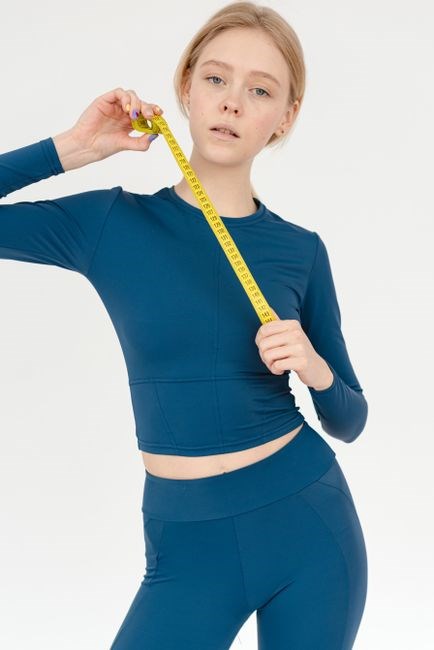
Body Measurement Techniques
Accurate body measurements begin with a flexible tape, placed snugly but not tight. Measure chest at fullest point, waist at natural waistline, hips at widest part. Record each in inches or centimeters for reliable sizing. Use a measuring tape for fit for comfort!
Chest, Waist, Hip Measurements
To capture accurate body dimensions, begin by selecting a flexible, non‑stretch tape measure. Position the tape around the fullest part of the chest, ensuring it lies flat against the skin. Record the measurement in inches or centimeters, noting any rounding to the nearest half unit for consistency.
Next, measure the waist at the natural waistline, typically the narrowest point between the ribs and hips. Keep the tape snug but not compressing the skin. A slight slack allows for breathing and movement, which is essential for comfortable apparel fit.
Finally, measure the hips at the widest circumference, usually over the buttocks. The tape should remain parallel to the floor and maintain contact with the skin without indenting. For individuals with significant torso asymmetry, measure both sides and average the results to reduce error.
When recording, use a consistent unit system across all measurements. Convert inches to centimeters by multiplying by 2.54, or vice versa, to align with international sizing charts. Documenting each step ensures repeatability and aids in selecting garments that match body proportions accurately.
- Use level surface to.
- Measure twice and average to reduce human error.
- Use a mirror to confirm symmetry in waist and hips.
- Record measurements in both metric and imperial units.
- Keep a log of changes over time for growth tracking.
- Consult sizing charts when converting between brands.
Height and Weight Charts
Height and weight charts provide a quick reference for determining appropriate clothing sizes based on an individual’s stature and body mass. Most retailers use a two‑column table that pairs height ranges with corresponding weight ranges for both men and women. The charts are derived from population studies that identify average body proportions at various ages. When using a chart, first locate your height in the left column. Then read across to find the weight band that matches your measurement. If your weight falls between two bands, choose the larger size for comfort. Some charts also include body mass index (BMI) values, allowing shoppers to compare their BMI to the chart’s recommended weight range. For children, height‑weight tables are segmented by age groups and percentile curves, helping parents select age‑appropriate clothing. Always double‑check the chart’s units—most use centimeters and kilograms, but some use inches and pounds. When in doubt, measure your own height and weight and cross‑reference with the chart to ensure a proper fit.
These charts are most accurate when paired with precise personal measurements. They help avoid the common pitfalls of online shopping, such as ordering a size that is too tight or too loose. Retailers often provide conversion tables that translate height and weight into specific garment sizes, ensuring a better fit across brands. For those who prefer visual guides, many sites offer interactive tools that let you input your height and weight to see recommended sizes in real time. Additionally, health professionals use height‑weight charts to monitor growth and assess nutritional status, making them valuable tools beyond apparel selection!

Furniture and Room Dimensions
Standard room sizes guide furniture placement living room measures 14‑15 ft by 18‑20 ft, while bedrooms average 10‑12 ft square. Sofas should allow 2‑3 ft clearance, beds 3‑4 ft, and tables 1‑2 ft from walls. These guidelines help create balanced very useful spaces.
Standard Sofa Size
In contemporary interior design, sofa dimensions are calibrated to fit typical living spaces while providing comfort and aesthetic balance. A standard three‑seat sofa typically measures 80–90 inches in width, 35–40 inches in depth, and 30–35 inches in height from floor to seat. The seat height is usually 18–20 inches, allowing adequate legroom for adults. The back height ranges from 30 to 35 inches, ensuring a supportive posture. Armrests are commonly 12–15 inches tall, offering a gentle transition between seat and back. Lengthwise, a sectional or modular sofa can extend from 120 to 150 inches, accommodating larger rooms or family use. The overall footprint, including armrests, should not exceed 12 feet in width to maintain sufficient circulation space. For two‑person sofas, widths narrow to 60–70 inches, with similar depth and height specifications. Upholstery thickness and cushion density affect perceived size; a 2‑inch padded sofa may feel bulkier than a 1‑inch model of identical external dimensions. When selecting a sofa, consider the room’s square footage, ceiling height, and the presence of other furniture to ensure harmonious spatial relationships. Standard measurements provide a reliable baseline for fitting a sofa into a room while preserving comfort and style.
Additionally, designers recommend leaving at least 36 inches of clearance on either side of the sofa to accommodate movement and accessories. Increase the overall dimensions by up to 12 inches in width and 6 inches in depth. Always measure the room’s actual dimensions before purchasing to confirm compatibility fast now!.

Bedroom Layout Guidelines
When arranging a bedroom, the primary goal is to create a harmonious flow that balances functionality, comfort, and aesthetics. Begin by selecting a focal point—often the bed—then position it against the most visually dominant wall. The bed should sit at least 24 inches from the nearest wall to allow for easy movement. Place nightstands on either side, ensuring a minimum of 18 inches of clearance between the bed and any furniture. A wardrobe or dresser should be positioned to avoid blocking natural light sources; ideally, it should face a window or a wall that receives ample daylight. If the room contains a desk or study area, locate it near a power outlet and, if possible, orient it so that the view is unobstructed by windows or doors. Rugs should be placed under the bed and nightstands, extending at least 12 inches beyond the furniture to define the sleeping area. For rooms with limited space, consider floating shelves or wall-mounted storage to free up floor area. Lighting should be layered: overhead fixtures for general illumination, bedside lamps for task lighting, and accent lights to highlight artwork or architectural features. Finally, maintain a clutter-free environment by incorporating built-in storage solutions and ensuring that pathways remain at least 30 inches wide for comfortable circulation. Following these guidelines will result in a bedroom that feels spacious, organized, and inviting. Remember to measure the room’s dimensions before purchasing furniture to ensure a perfect fit.
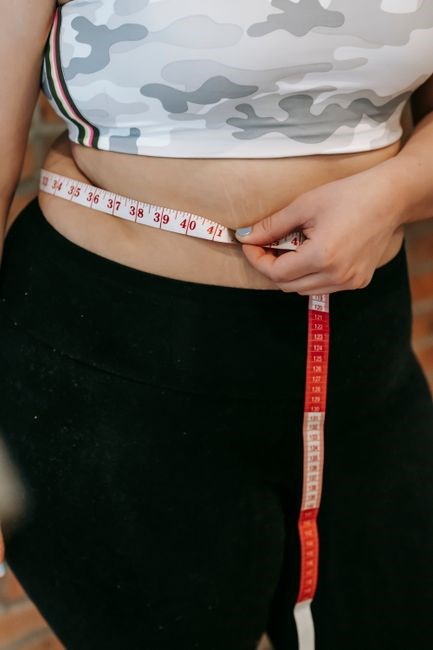
Vehicle Interior Sizing
Vehicle interior sizing focuses on seat pitch, width, and headroom to ensure passenger comfort. Standard seat pitch ranges 28–32 inches, while width varies 18–20 inches per seat. Headroom should exceed 30 inches for adults, and adequate legroom is critical for long trips. Width 18–20 inches, 35 inches ad.
Seat Pitch and Width Standards
Seat pitch, the distance from a point on one seat to the same point on the seat in front, is a key indicator of legroom. In passenger cars, manufacturers aim for 28–32 inches, with luxury models reaching 34 inches for maximum comfort. Compact vehicles often settle around 27 inches, while minivans and SUVs may provide 30–32 inches to accommodate families. Width, measured from seat edge to seat edge, typically ranges 18–20 inches per seat in sedans and 20–22 inches in larger vehicles. For rear seating, width can increase to 22–24 inches to allow side‑by‑side seating. Headroom, though not part of pitch, is usually 30–32 inches in modern cars, ensuring adequate space for taller occupants. Ergonomic seat design also considers seat depth and backrest angle, with 12–14 inches depth for adults and 10–12 inches for children. These standards help consumers compare models and predict comfort levels before purchase. Seat pitch is measured from the floor to the floor of the seat in front, providing a clear metric for legroom. A pitch of 32 inches allows a 5‑foot‑10‑inch adult to sit comfortably without knee pressure. Width standards are influenced by seat cushion width and side bolsters, ensuring that the seat remains stable during turns. In commercial vans, seat widths can reach 24 inches to accommodate larger cargo or passengers. Manufacturers also offer adjustable seat rails to fine‑tune pitch for individual drivers. Safety considerations include seat belt anchorage points, which must be positioned to accommodate the standard pitch and width. Finally, consumer reviews often highlight the perceived spaciousness, correlating closely with these standardized measurements.